Posts

Organize and Maximize Your Outdoor Time

Make the most of your outdoor time

Organization Tips to Maximize Your Outdoor Time

Self-storage can help make your camping more organized.

With spring on our doorsteps, thoughts of camping trips are on many minds. Maximize the time you spend camping and lessen the work that goes into the set up with a few organization and storage tips from some long-time camping pros at our storage office.

Making yourself a couple of prepacked containers will help get out the door quickly for those spur of the moment camping trips driven by great weather or a little extra time off.  Your first container will be non-perishable food, label it as such so there is no guessing what’s inside. The second container will have toiletries. And if you are tenting consider a third container.

Container one: non-perishable food. Think about quick and easy meals, dry soup mix, cereal in small, sealed containers, graham crackers and chocolate bars ready for smores night, trail mix, granola or protein bars, jerky, freeze dried meals, instant coffee, drink powders or shelf stable milk products.

Container two: Biodegradable toilet paper, Hand sanitizer, biodegradable shampoo, toothbrush and toothpaste, quick drying towel, feminine products, a first-aid kit, or first-aid supplies.

If you are tenting consider a third container that has kitchen equipment like a can opener, tin foil, cutting board, knives, paper towel, weatherproof matches, or a BBQ lighter, cookware, travel mugs, utensils, a sharp knife, biodegradable dish soap, water bottles, trash bags, a dish towel and pot scrubber. This could mean doing a double up purchase, so you are not stealing from the kitchen.

Pro tip: If you are glamping or renting a condo somewhere have a kit on hand that contains, favorite spices, gravy mixes, cutting board, knives, dish cloth and tea towel, rope, corn holders, salt, pepper, and sugar because not every short-term rental comes with these items.

Happy Trails…

Camping with a sunrise view

It’s a new day, perfect for camping

….. oh yes, now you don’t have to unpack these contains in colder months. Let’s consider where and when you are keeping all this summer camping gear during the cold months.

A 5 by 10 storage unit will hold a person’s camping gear.  Take some time and wipe down your tent, tarps, storage containers, and small equipment. If you found un-used items, its now time to think if they can come off your list for next summer.  Things like oars, water skis and life jackets can stand up in a corner of your storage unit in a laundry basket to keep them together. Pull out all batteries from lamps or other equipment to avoid damage from corrosion that can happen when these items sit.

Keep your heavy items at the bottom of your unit, putting the lighter containers or boxes on top to maximize your space.

A hint to help keep all your items dry over the winter months is to keep all those little silica packets that you find coming in nearly everything you purchase. Also to avoid musty smells consider hanging your tent and sleeping bags instead of storing them in their stuff sacks.

A little organization and storage wisdom will help get you get quickly on your way to your next adventure.


If you are needing storage because of a move, remember we have locations in Medicine Hat and Drayton Valley.


~Sue Sage
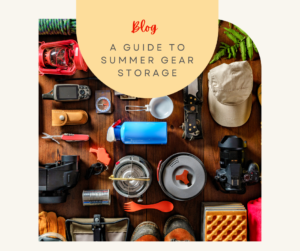
A Guide To Summer Gear Storage

Storing Summer Gear

A Guide to Summer Gear Storage

As the sun-soaked days of summer fade on the horizon, they leave behind the simple joy of outdoor
pursuits, from pedaling along scenic trails, to setting up camp, or gliding gracefully atop shimmering
waters—summer gifts us with a multitude of cherished experiences.
Whether you are a biker, camper, or paddler, summer gives us great pleasure. All these wonderful
activities lead to an accumulation of outdoor gear. What is your plan for storing it during the off-season?
In this guide, we delve into preserving these cherished adventures—cleaning, organizing, and storing
your summer gear. It’s a journey that involves not just safeguarding your possessions but also ensuring
that the magic of summer continues for years to come.

Summer Gear Storage Tips:
1. Clean Your Equipment
After every summer adventure, it’s essential to clean your equipment thoroughly. Use warm water and
mild soap to cleanse your gear, including tents and sleeping bags. Removing any dirt and ensuring
they are completely dry before storage is vital, particularly for preventing mold and mildew.
2. Choose the Right Storage Containers
Long-term storage of tents and sleeping bags should be in breathable mesh bags or cotton bags like old
pillowcases. Loosely fold these items for long-term storage instead of tightly rolling them. This allows
airflow, preventing mold and mildew growth. Remember, compressing a sleeping bag for extended
periods can damage its fill.
3. Organize Smaller Items
Store smaller items like flashlights, matches, eating utensils, plates, cookware, and more in clear storage
containers. This way, you can easily identify and access them when needed.
4. Organize Water Gear
Choose a large container to hold wetsuits, life jackets, water shoes, and other water gear. This ensures
they are kept together and protected during the off-season.
5. Follow Manufacturer Recommendations for Watercraft Storage
Store paddle boards, canoes and kayaks indoors so the winter weather will not degrade fiberglass,
plastic, fabric or specially-coated wood hulls.

Pro Tip: keep a checklist stored with your equipment so you don’t forget anything for your camping
trips. Your list should include all items you will typically want to bring along.
Many of our clients store their summer gear in the garage or a spare closet so they can quickly pack up
the car for a weekend getaway. But if these items are filling your halls and other living spaces self
storage is an option that comes in many sizes to accommodate these items in the colder months.
Call us now at Lacombe Storage where we prioritize your storage needs —  1-855-795-8584

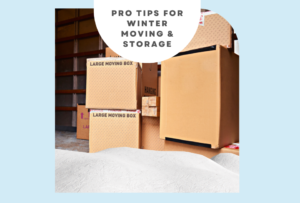
Winter Moving Tips

Winter Move

Pro Tips for Moving and storing

The trailer or back of the truck typically isn’t the warmest place on a cold day and definitely not ideal for your fragile items or electronics. The transition from a warm to a cold environment can cause things to break. If you are going to move or store anything fragile or any electronics, be sure they are well wrapped in something that is going to keep them from breaking and offer some insulation

Here are some other dos and don’t for moving in the cold:

Do Protect Items from the Cold

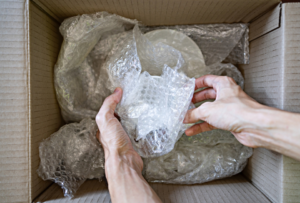
Packing with bubble wrap

Protect your stored items with bubble wrap

Extreme temperatures can make certain items more susceptible to damage. Make sure to use extra wrapping, bubble wrap, thick towels or blankets to protect breakable items and electronics. Remember that containers with liquids can freeze so avoid putting them in the back of the moving truck or into a storage unit. Things like electronics are fine being stored cold as long as you let them cool down and warm up gradually. Consider taking these items with you in the cab of the vehicle to ensure they arrive safely. Check out our YouTube video on packing up breakable dishware.

Do Chose Cardboard Boxes Over Plastic Totes

Everyone loves plastic totes, but there are some drawbacks to using them especially during colder months. Plastic becomes slippery and brittle in the cold making it more susceptible to sliding and falling. And when it hits the ground, it breaks. Cardboard on the other hand has insulating properties for your breakables and its surface doesn’t change during cold weather. This makes it a safer choice for stacking and storing your belongings during the winter.


Do Seal Your Boxes with Packing Tape Instead of Masking Tape

Some adhesives get brittle and lose their stickiness in the cold and this is especially true of masking tape. Packing tape once applied to the box won’t release when it gets cold so you don’t have to worry about the box breaking open.

Don’t Pack at the Last Minute

Leaving packing and cleaning to the last minute can make the moving day more chaotic for everyone involved. The sooner you can get things organized, the easier and faster it will be on the moving day. A good declutter before packing starts will be a big help to know what you really want to pack and unpack. We have a little video on decluttering a closet on our YouTube channel.

Do Make Sure Walkways are Clear of Ice and Snow

Shoveling snow

Clearing sidewalks before a move

We make sure that our yards and the entry way to all storage units is free and clear of ice and snow for your safety. You should do the same at home before you start removing boxes from your home. It hurts to slip and fall, never mind having a box land on top of you.

Don’t Move in the Dark

Night comes early during the Canadian winter and moving in the dark can be unsafe for you and your belongings. Try to work out your schedule so you are moving earlier in the day while it’s still light outside. Please also keep in mind that while our yards are lit at night the insides of storage units are not.

Have a safe move and make sure to bring something warm to drink. If you need to warm up you are welcome to stop by the office. We have someone onsite during the day Monday to Friday.

Should You Store It?

Can you store it?

Should You Store It?

Whether your storage is in a basement, an attic, a garage or a storage unit don’t fill it with things you don’t really want or need. While we’re not going to tackle cleaning out your storage here (a topic for another day), ask yourself these questions before packing things away.

1) Do you need it? This sounds like a simple enough question, but how each of us answers this is highly individual. If you are making an effort to cut back on clutter, try to get real about what “need” means. Defining what is important to you is the first step to efficient storage.

2) Does it work? Don’t let your storage space become the place where broken things go to die! Stop telling yourself, “I’ll fix it one of these days”. If you don’t care enough about the item in question to get it fixed right away, it’s probably not worth keeping.

Broken Watch

Broken Watch

3) Is it clean? Storing clothing and other textile items without having them cleaned first can spell trouble. Moths and other critters are attracted to the dirt on textiles. And body oils will cause fabric to break down over time. Your best defense is to put only clean items into storage. Tools and outdoor equipment, including patio furniture, should also be cleaned before storing to avoid deterioration.

4) Is it yours? It’s amazing how much stuff we can accumulate from others. If you are storing the item in question for a relative or child, consider setting a limit and giving the item back rather than continuing to let it take up valuable storage space.

5) Are you saving it for family? When you save things for family like children or grandchildren, making decisions about what to keep can be a challenge. Often a small amount of carefully chosen and properly stored items can be far more meaningful (and welcome) than an attic’s worth of stuff. Tuck a note about where each piece came from or why it is important to help pass along the stories to the next generation.

6) Will it create a problem if stored? Perishables like food, pet food, plants and potting soils shouldn’t be put into storage as they can create problems by attracting bugs, mice and other pests. Ammunition, chemicals, fertilizers, fireworks and fuels also shouldn’t be stored as they will deteriorate, become unstable and create a fire hazard.

7) Is it irreplaceable? One-of-a-kind items, collectables, jewelry, family photos, and documents like birth certificates and passports should be kept in a safety deposit box or a safe in your home. While storage companies take every precaution to keep things safe and secure break-ins and violent weather can still impact these facilities.

Mona Lisa

Mona Lisa

First Time Storage Tips


Storage unit and hidden shackle lock

First Time Storage Tips

At some point, you or a family member experience an event where self-storage offers a solution. Whether it’s a move, a renovation, or a death in the family if you’ve never rented a storage unit here are some insider tips to help things go smoothly.

First, determine what size storage unit you need. The quickest way is to inventory what you are storing and use a storage size calculator. This tool can be found on a storage company’s website and can save you the headache of choosing the wrong sized storage unit.

Once you know the size you need check storage prices. Keep in mind that the price given isn’t always the final price. Some storage businesses require a damage or gate fob deposit, or charge admin or service fees.

Now that you have determined the storage facility and a unit size, be prepared for some paperwork. Just like renting a car, or a home, storage rentals require a contract. To keep this as painless as possible have the following information ready:

– Photo ID.

– Your contact information (current address where you receive your mail, your cellphone number and an email address.

– Name an alternate contact for your account (with phone number) in case you can’t be reached for any reason.

– If you are storing a vehicle you will have to show the current registration as proof of ownership.

Before you sign the rental agreement make sure you understand it. You don’t want to find yourself in breach of this legally binding contract, just because you didn’t read it. That’s a little like telling a police officer that pulled you over for speeding that you didn’t see the speed limit sign.

The storage contract will contain things like how much and when rent is due, additional charges, storage rules (what you can and can’t store and acceptable or unacceptable activities in the storage facility), insurance requirements, and the repercussions if you fail to pay rent.

While these contracts can seem daunting a good storage company will have this document written in plain language and have trained staff that should willingly offer to explain it to you.

Pro Tip:

A storage facility’s insurance never covers a renter’s possessions. This is because the insurance company has no way of verifying the value of these possessions. As a homeowner or renter, you may already have content insurance that will cover belongings in storage. Always inquire with your insurance company to ensure items in storage would be covered.

Pro Tip:

When you are talking to storage staff about the contract, also ask if someone is onsite in case you need help while in the facility, what the office hours are and what yard access hours will be.

Once you understand the storage contract, and your questions have all been answered, sign the agreement and then you are ready for the final step, packing your belongings into the storage unit.

Pro Tip:

Before you reach the yard with your belongings, learn how to access the storage facility and your unit. Whether you received a fob, or access code test for facility, make sure it works and check to see if you can get into your storage unit.

Pro Tip:

Your community or the community you are moving to, can be a great source of information as well. Check out local social media sites that will answer questions regarding the involvement of a Storage office in their own local area. For Lacombe we suggest checking out Lacombes community page.

Now you can get down to the business of loading your storage unit. For tips on how to maximize your space check out our blog on how to pack a storage unit.


Jumping The Self Storage Line

Climbing the Self Storage Line

Jumping The Self Storage Line

Self storage businesses across Alberta have been getting busy. So, finding a storage unit at the
last minute has become much harder.

Here’s how to get a leg up on your fellow storage unit hunters.

As soon as you are aware that you need storage, start looking. It costs nothing to look around.

Remember price isn’t everything
Check reviews and also see how the business connects with its customers. Is communication
strictly online? Do calls go to a remote call center? Are staff knowledgeable about storage and
the local community?

Pro Tip:
Is there someone onsite if you need help? Moving and storing your belongings can be stressful
and having knowledgeable help available can make or break your storage experience

Be flexible
Could you take a slightly bigger or smaller unit? Using an online storage calculator will help you
choose the right size for your belongings.

Directions

Plan Ahead

Pro Tip:
If there isn’t a storage unit in the size you need ask about making up the size you need by using
two smaller units.

Get your name on a waiting list
A good self storage business will call if you are on a waiting list and a storage unit comes
available.

Pro Tip
There will be times when a unit comes available before storage staff get to people on the
waiting list. That is why keeping an eye on their website can be a huge advantage. Using the
storage company’s online rental platform can help you skip the waiting list, because you can
often move yourself in online before the storage unit is taken by another renter.

Start a conversation with the storage staff
Storage staff can take care of you over email to help you make the most of your time.
Also, don’t be afraid to call the storage office. Most offices don’t mind if you call and check in
from time to time. A good storage operator is there to do what they can to help you!

Storage Tetris – Packing A Storage Unit

Playing Tetris with storage

How to pack to a storage unit

How do you play? you ask. Well, we’re going to try to explain the best we can.

First rule in this game: When you rent a storage unit make sure to get the right size. Too small or too large will mean your belongings don’t fit or you will wind up paying for empty space. A quick tip hear is to use our storage calculator.

Pro tip: Once you have rented the right sized storage unit put a plastic drop sheet on the floor to protect your belongings from moisture that can come up through concrete floors or underneath the roll up door.

Now it’s time to start packing your unit: Placing items like furniture and appliances should be considered first. The best way to play Storage Tetris is to put appliances and large furniture like couches against the far back wall first. Take the backs off loveseats and chairs (if they are designed to do so). This makes it so these furnishings can be stacked.

Once you have those heavier items along the back wall of your storage unit it’s now time to place things like mattresses along the side walls. A little extra advise we found can be checked out in this Museum blog on packing and storing.

Pro tip: put in mattress in mattress bags to protect them from damage during storage.

Place bigger heavier totes or boxes just inside where the mattresses are leaning against the wall. Next stack lighter weighted boxes onto of the larger ones.

Pro tip: to keep everyone accessing the storage unit safely only stack things as high as the shortest person can safely reach.

Lay out of the storage unit

Work toward the center of the unit flowing forward. Remember to put items you will not be needing toward the back and items you will frequently need toward the front of the storage unit. As in the game of Tetris, fill gaps with similar shaped items to create tight stacks that maximize the space. Shelving units can be used to store boxes.  This also helps free up the floor space for more awkward shaped items. The “Tetris” effect is a great read from a company called You Move Me.

Pro tip: make sure to leave yourself a center isle.

Pro tip: Try not to place cardboard boxes near the front of the unit as rain and/or snow can leak in.  Once you’ve got the unit loaded cover as much as you can with a dust cover to keep it clean and ready to use.

Now you are ready to pack and store your belongings successfully. Remember heavy items at the back along with items you won’t need any time soon and lighter or frequently needed items at the front. If you something you need that we don’t carry, please check out our friends over at Nowco Home Hardware.

Once you are ready to go, head over to our rental page and secure your spot!

Protecting Items In Storage

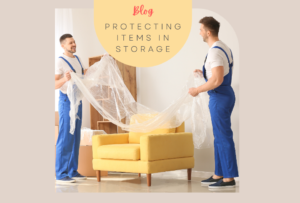
Using a Drop Cover for Protection

Protecting Items with Dust Cover

You’ve made the decision to place your items in storage and now that you have everything
ready go, here are some simple tips to protect what you are storing:

Confounded Condensation
Depending on the weather extremes and humidity in your area, it is possible for condensation
to build up on your stored goods which can cause water and mold damage. A good option to
avoid damage from prolonged moisture exposure is to put a plastic drop sheet on the floor of
your storage unit before placing items in the unit. Using pallets to put your belongings on is
even better, especially if you are storing goods for longer periods of time. Also, leave some
‘breathing space’ (about two finger widths) between stacked items so fresh air circulates
between your belongings.

moving furniture

Man with moving boxes

Don’t Over Stack
When placing boxed items in storage, the temptation is to stack as high as you can reach. Boxes
are only designed to take so much weight and over time might give way under the stress of
over stacking. This can result in entire stacks toppling over. If the items in those boxes are
fragile… well, you get the point. You also need to consider your safety. For this reason, stacks
should only go as high as your natural reach…or the natural reach of the shortest adult
accessing the storage.

Dreaded Dust
Nobody wants to open their unit and find that everything inside is now dust covered. All that
cleaning you did to prepare your goods for storage has been potentially wasted – and let’s face
it: dust is inevitable. So why not use a couple of inexpensive plastic drop sheets to help protect
your items? Drop sheets should be draped loosely around items to encourage air flow but offer
protection from fine dust.

By using these three tips, your stored goods should remain intact, dry and dust free. Be sure to
check out the retail items available for purchase
at our locations to assist with your packing needs. We are here to help you through every step
of your rental process.
You can access more information on our blog site such as the importance of cleaning before you store, as well as make use of our handy
storage calculator to determine the correct unit size for your needs.

Extra Help

This YouTube video has a lot of good information on storage for you as well.

Ron Heizelman – Site Manager, MHS

Moving During A Pandemic

Packing and moving can be difficult at the best of times, but moving during a pandemic creates a whole new set of challenges. If you have to move you and your moving company should put health and safety first. We suggest you call your moving company to discuss your options and they should help you plan as safe (and seamless) a move as possible. This may include: Read more

Feeling Overwhelmed While You Work At Home?

Feeling overwhelmed while you work at home? Getting organized can help you take back some control and get clear on what work tasks should take priority. Not all of us have Marie Kondo’s instinct for organization, so where should you start?

  • First, find a separate space in you home for your home office. If you have no space choose a corner in the living room or take over the dining room. If you are considering making a work space in your bedroom, I recommend getting a room divider of some sort to separate the work area from the sleep area. Seeing your place of work while you are trying to wind down and trying to sleep is not good for you psychologically.

Read more